
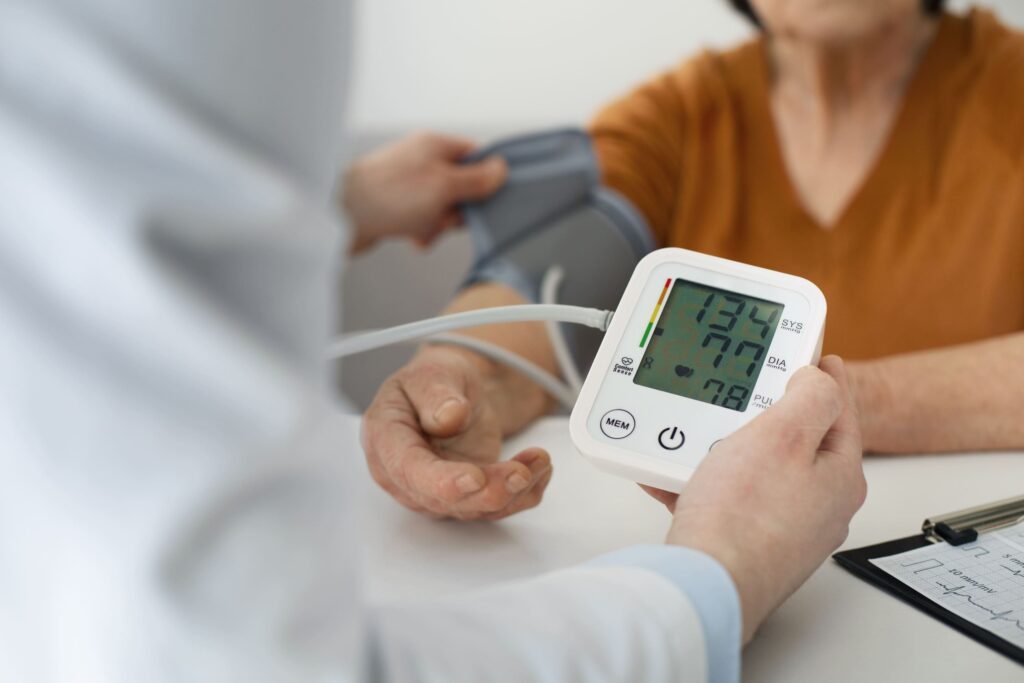
The heart pumps blood into the arteries with enough force to enable blood to reach various organs in our body. Blood pressure (BP) is the force of blood on the wall of the arteries as it circulates throughout the body. If this force is too great, it results in high blood pressure. Hypertension is the medical term used to denote high blood pressure. High BP is a serious disease because it can affect various important organs in our body, particularly heart, kidneys, brain and eyes.
What Do Blood Pressure Numbers Indicate? The top or higher number is called the systolic pressure. It represents the pressure while the heart is contracting and pumping blood into the arteries. The lower or smaller number represents the pressure when the heart is relaxing and known as the diastolic pressure. The American Heart Association has recommended guidelines to define levels of normal and high BP (hypertension):
| Systolic(mmHg) | Diastolic(mmHg) | |
| Normal | <120 | <80 |
| Pre-Hypertension | 120-139 | 80-89 |
| Hypertension(stage 1) | 140-159 | 90-99 |
| Hypertension(stage 2) | 160 | ≥100 |
Magnitude of Problem and Predisposing Factors
High BP is a worldwide problem, affecting approximately one in five adults. The prevalence of high BP in Indians has been reported to be 15-20%. In almost 90% of people with high BP, the cause is not known, and is referred to as primary or essential hypertension. Others, particularly younger patients, develop high BP secondary to some known causes which are not only treatable but even curable. There are several factors which predispose an individual to essential hypertension. These include: (i) Obesity, defined as body mass index greater than 30kg/m2. Obese people are 2 to 6 times more prone to develop high BP as compared to normal weight. (ii) Excessive intake of salt. (iii) Lack of exercise. (iv) Heavy and regular use of alcohol. (v) Use of oral contraceptives (vi) Constant stress and mental tension, and (vii) Tobacco use in any form. Besides these there are some rnon-modifiable factors which predispose to high BP. (i) Family history: The tendency to develop high BP runs in families and genetically inherited. (ii) Gender: Generally men have a greater likelihood of developing high BP than women.
Detection of High Blood Pressure
High BP usually has no symptoms, and therefore, often labelled as the ‘silent killer’. Their BP is detected either on routine examination or after development of symptoms secondary to organ damage. Symptoms often associated with high BP are headache, palpitations, dizziness, nose bleeds, blurring of vision, and shortness of breath on exertion. A long-standing uncontrolled high BP may present with one or more of the following organ damage: (i) heart attack, (ii) heart failure, (iii) kidney failure, (iv) stroke or transient weakness of one half of body, (v) progressive diminution of vision, and (vi) peripheral arterial disease leading to leg pain on walking.
About one percent of individuals develop very rapidly and severe hypertension, often associated with severe headache, nausea, vomiting, and neurological symptoms; this entity is called malignant hypertension.
When to Seek Medical Attention and How to Follow-up?
High BP may be detected as a part of community health screening, during preoperative cardiac evaluation for any major noncardiac surgery and medical examination before seeking employment. Blood pressure readings may vary through the day, being highest in the morning and again in the late evening, and therefore multiple recordings are recommended before labeling an individual as hypertensive. Upon being diagnosed as high BP patient, the initial investigations should include routine kidney function tests on blood, Doppler ultrasound for kidneys, electrocardiogram, echocardiogram, eye checkup (fundus visualization) and blood levels of sugar and lipid content. Periodic evaluation is absolutely essential after detection of hypertension. After initiation of therapy, the individual should seek medical advice once in 2 weeks, to assess adherence to drug therapy, efficacy of treatment and potential adverse effects of drugs. More frequent visits may be necessary in patients with severe hypertension. Once BP is stabilized, follow-up visits should be made once in 2-3 months to regulate the doses of drugs and early detection of complications.
Prevention of High Blood Pressure
High BP may be prevented by some of the following measures:
- consumption of fruits, atleast 3-4 servings every day,
- consumption of low fat, high fiber, nutritious diet with plenty of water,
- regular exercising for atleast 30-40 minutes daily,
- decreasing salt consumption to less than half teaspoonful a day,
- stopping smoking,
- maintaining an ideal body weight,
- taking alcohol in moderation, preferably not more than one drink a day,
- reducing stress levels by practicing yoga and meditation,
- regular health check-up for early detection and prevent complications, and (x) regularly taking medications as prescribed.
Hard Facts Regarding High BP
- Hypertension is preventable and treatable, but not curable disease in vast majority of cases. Life style modification, drugs, and dietary regulations are required in most cases (thoughout life) and should not be stopped even when blood pressure is controlled.
- High BP remains unknown in 50 percent of affected individuals and detected only when it leads to major complications. It is, therefore, a ‘silent killer’ and hence early detection and control is absolutely essential to prevent its fatal consequences.